Court Backs Trump’s Power to Deploy National Guard in U.S. Cities Amid Rising Tensions
Court Backs Trump’s Power to Deploy National Guard in U.S. Cities Amid Rising Tensions
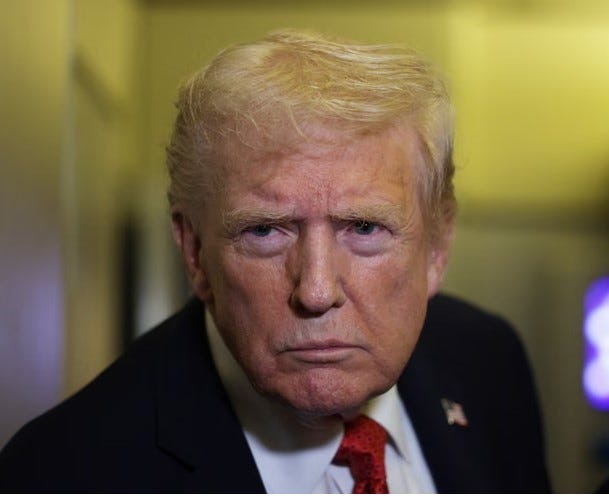
October 21, 2025 — Washington, D.C. (The Guardian) — In a major legal victory for President Donald Trump, a U.S. federal appeals court has ruled that the president has the authority to deploy federalized National Guard troops to cities such as Portland, Oregon, without state approval — a move that has reignited fierce debate over the limits of presidential power and states’ rights.
The 2–1 decision, handed down by the Ninth Circuit Court of Appeals, temporarily allows the Trump administration to continue sending National Guard forces to urban areas to “protect federal property and ensure public order,” according to the court’s opinion. The ruling overturns an earlier district court injunction that had blocked Trump’s deployment order following legal challenges from Oregon state officials.
Background: The Clash Over Federal Intervention
The dispute began when President Trump ordered the deployment of National Guard troops to several U.S. cities earlier this year, citing “rising violent crime, organized unrest, and attacks on federal facilities.” Portland — long a flashpoint for protests and political tension — was one of the first cities targeted under the directive.
Oregon Governor Tina Kotek and Portland Mayor Ted Wheeler filed suit against the administration, arguing that the president had overstepped his constitutional authority by sending troops into the state without consent. They claimed the move violated both the Posse Comitatus Act, which restricts the use of federal military forces for domestic law enforcement, and the Tenth Amendment, which protects state sovereignty.
In July, a federal judge agreed and temporarily blocked the deployments, saying the president lacked “sufficient justification” for bypassing state approval.
The Court’s Decision
However, in Monday’s ruling, the appeals court reversed that decision, citing broad executive powers granted under the Insurrection Act of 1807 and subsequent amendments. The court wrote that “when federal property or personnel are under threat, the president maintains constitutional authority to take necessary action to preserve law and order.”
Judge Richard Clifton, writing for the majority, noted that “federal interests are not subordinate to state disagreement when national security or the protection of federal institutions is at stake.”
The dissenting judge, Marsha Berzon, strongly disagreed, warning that the ruling “opens the door to potential misuse of military power in domestic settings” and undermines the foundational balance between state and federal governments.
Reaction from Oregon Officials
Oregon’s Governor Kotek condemned the decision, calling it “a dangerous precedent that invites authoritarian overreach.” She announced plans to request a full en banc review by the entire Ninth Circuit Court, and if necessary, to appeal to the U.S. Supreme Court.
“The president cannot simply send troops into states whenever he feels it’s politically advantageous,” Kotek said in a press conference. “This ruling threatens the autonomy of every U.S. state.”
Portland Mayor Wheeler echoed her sentiment, calling the move “an assault on local democracy.”
White House Response
In contrast, the White House hailed the court’s decision as a “clear victory for law and order.” Press Secretary Sarah Huckabee Sanders said the president “has a constitutional obligation to protect Americans and defend federal property,” adding that the administration “will not hesitate to use every legal tool available to keep our cities safe.”
President Trump himself reacted on Truth Social, posting:
“The radical left wants chaos in our cities — we want peace. This ruling proves we have the right to protect the American people from lawlessness and violence. A great win for common sense and for America!”
Wider Implications
The ruling could have sweeping implications for future crises, potentially expanding presidential powers to use federal or National Guard troops domestically — even over state objections.
Legal experts are divided on the outcome. Constitutional scholar Laurence Tribe called the ruling “a constitutional stretch that chips away at the principle of federalism,” while conservative analyst Victor Davis Hanson argued that “in an age of domestic terrorism and urban disorder, decisive executive action is necessary.”
Civil rights organizations, including the ACLU, have also expressed alarm, warning that the decision could “set the stage for militarized responses to civil protests” in the future.
Next Steps
Oregon officials have 14 days to request a rehearing. Meanwhile, the Department of Defense has confirmed that National Guard units will remain stationed near key federal buildings in Portland and Seattle “until further notice.”
As the legal battle continues, the case is being closely watched nationwide, as it could redefine the boundaries of presidential power in the United States — and the fragile balance between federal authority and state sovereignty that lies at the heart of American democracy.


Comments
Post a Comment